70% Superfine Merino Wool

30% Brewed Protein™ fiber
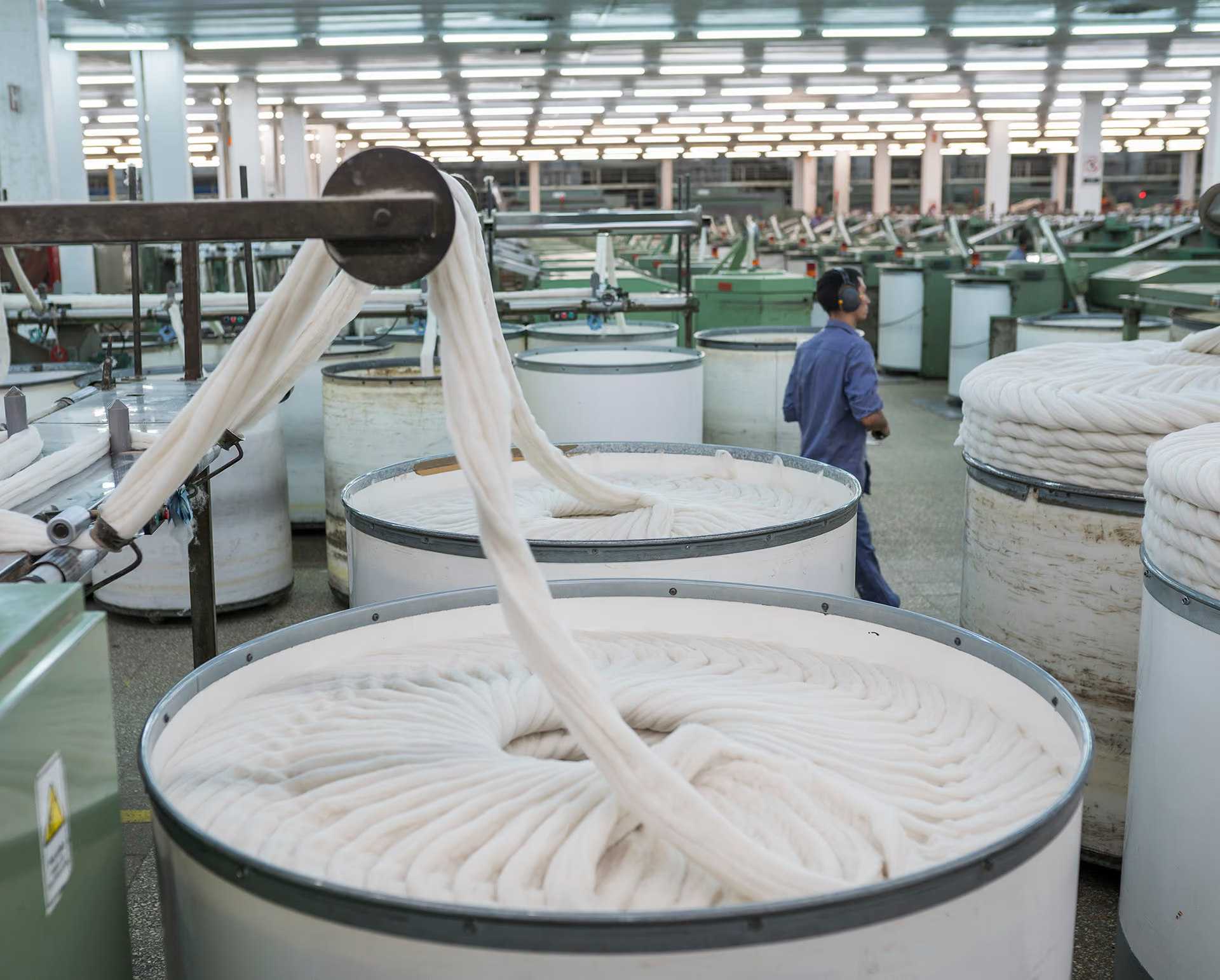
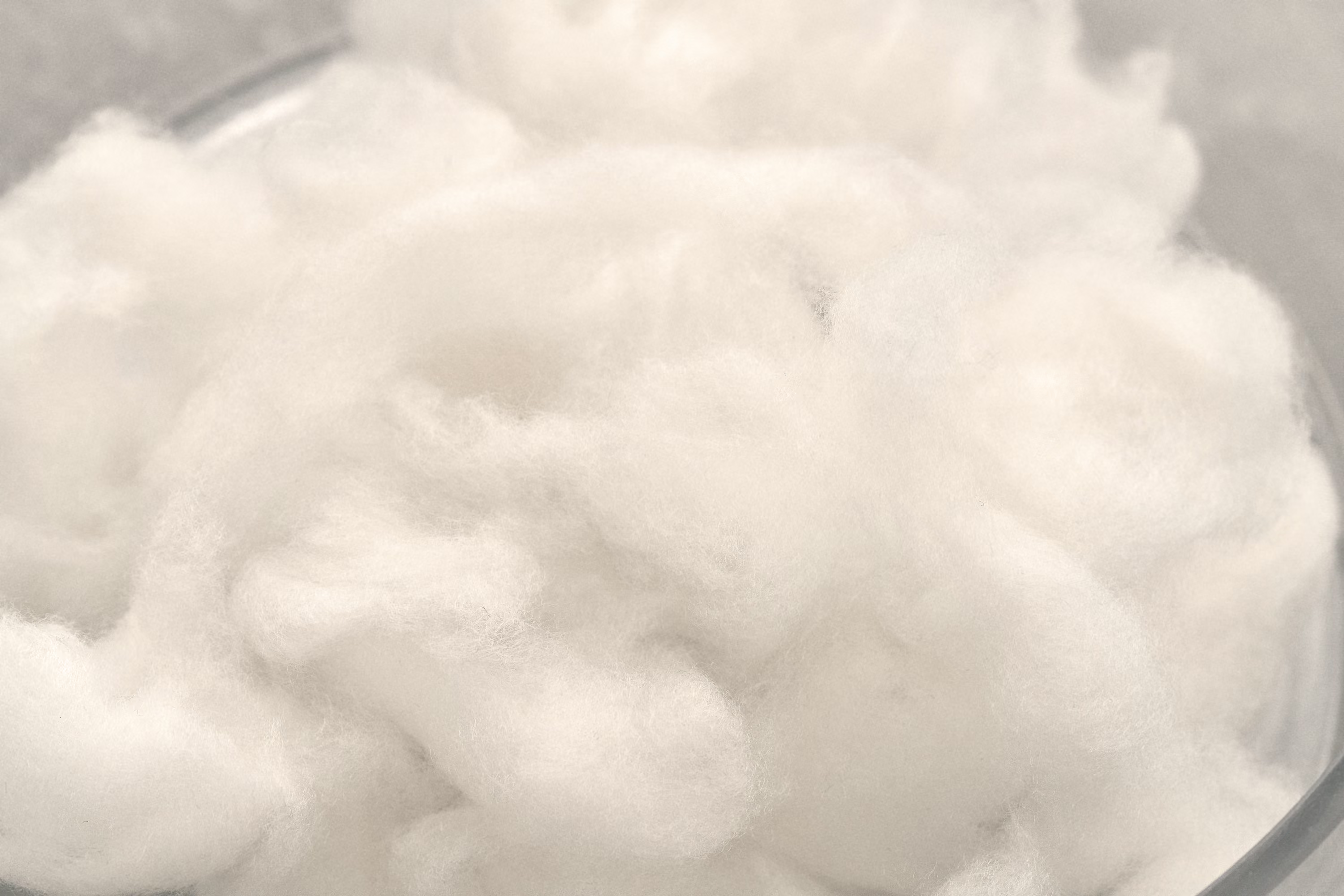
70% Superfine Merino Wool
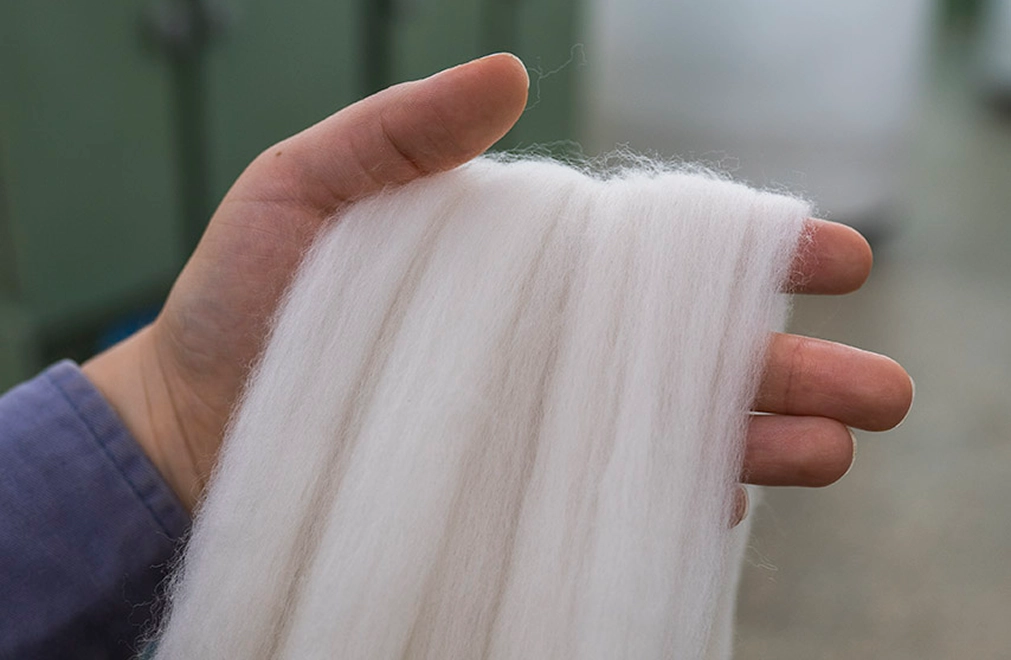
30% Brewed Protein™ fiber
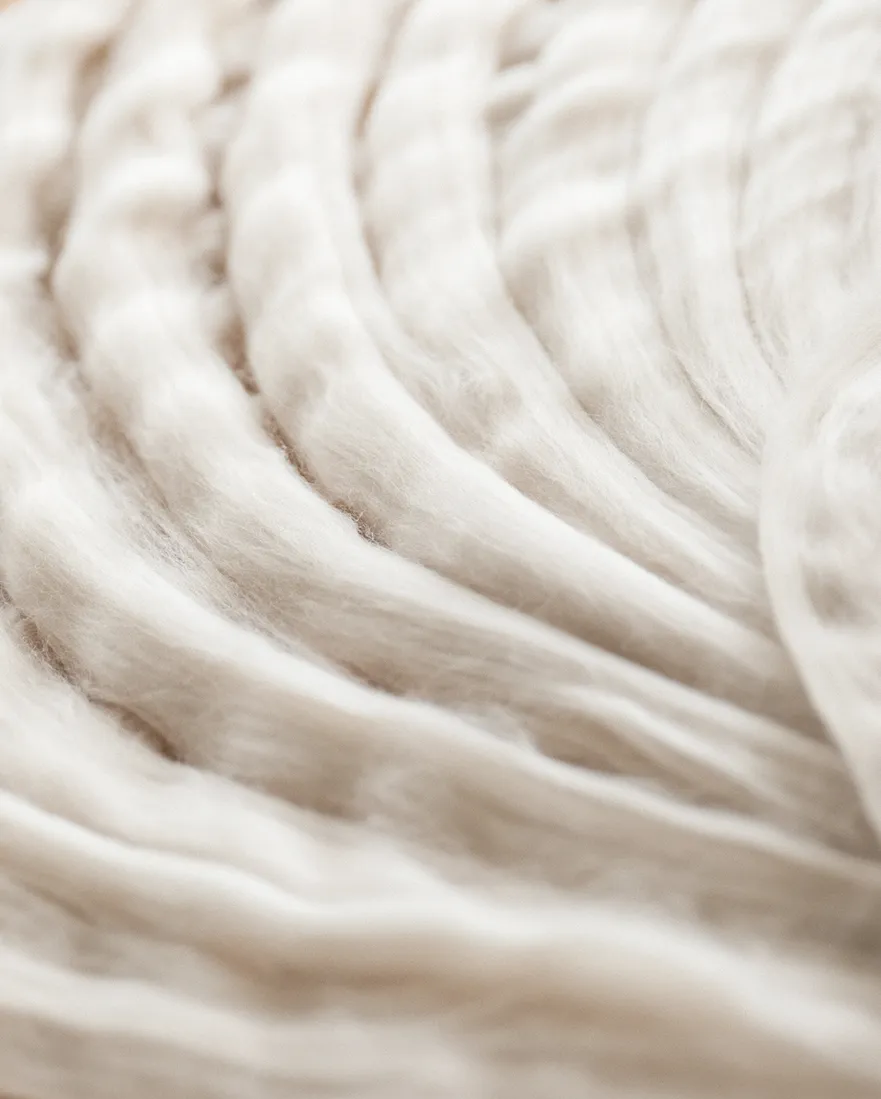
What is Brewed Protein™ fiber
Brewed Protein™ is a protein-based fiber made by microorganisms from plant sugars.
This fiber is made through fermentation, a process where microorganisms are used to grow protein-based fibers. It’s produced by Spiber, a Japanese biotechnology company. Petroleum-free, animal-free.
How it is made
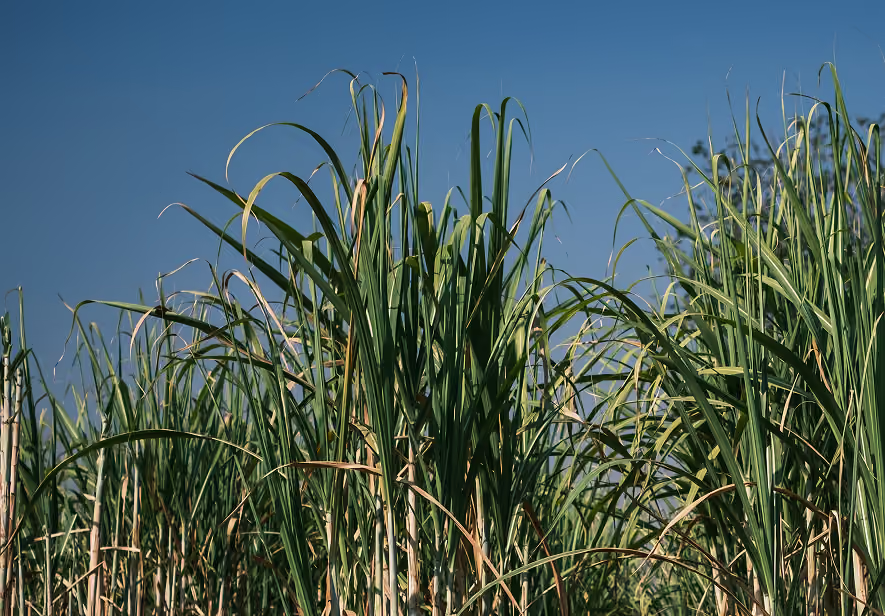
01. Feed
Plant-based sugars - from Bonsucro-certified sugarcane - are used as raw material.
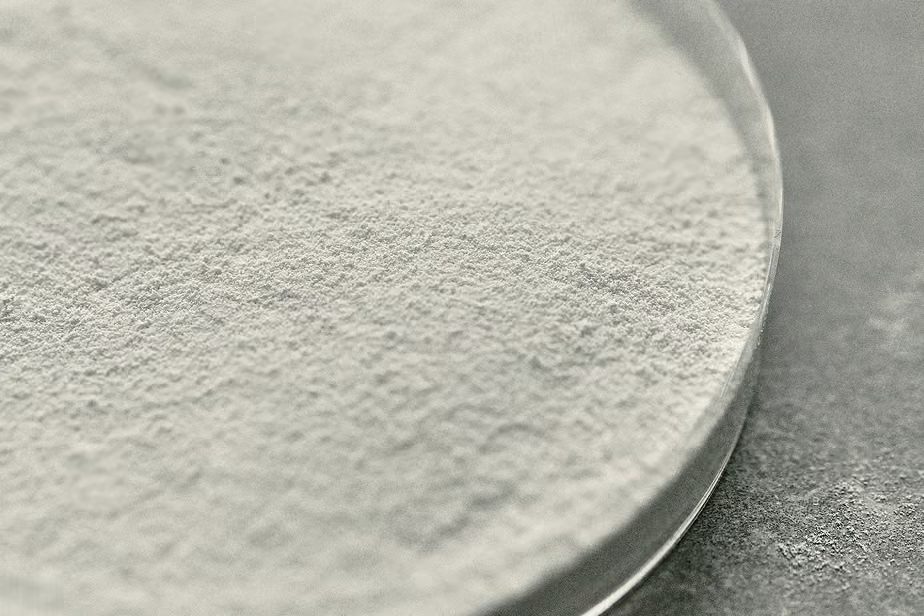
02. Brew
Microorganisms ferment the sugars and convert them into protein polymer - similar to how beer is brewed from grain.
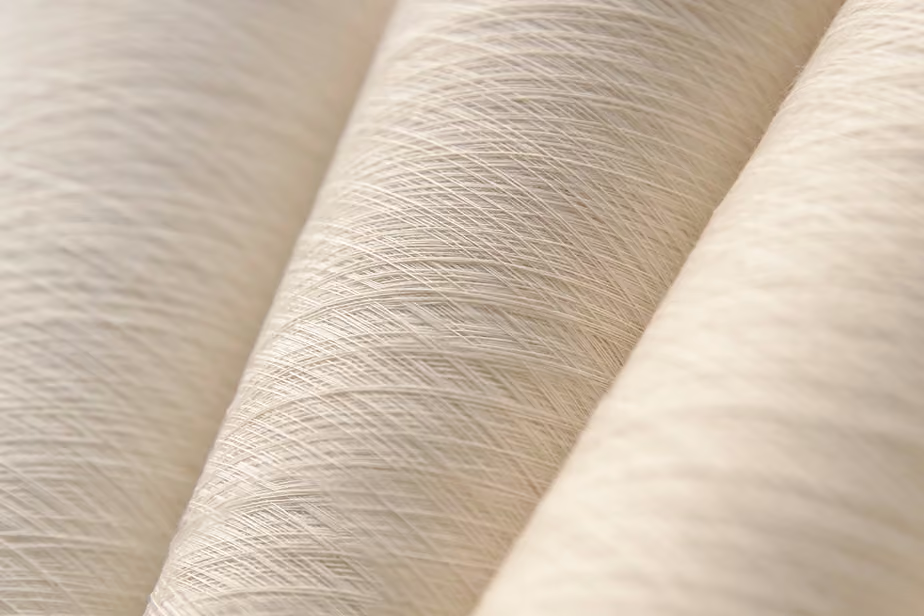
03. Spin
The protein polymer is dissolved and pushed through a fine nozzle to form fiber.
How it feels
Soft — comparable in fineness to cashmere, with a smooth, scaleless surface.
Light — noticeably lighter than merino wool in a finished garment.
Relaxed — the finished garment feels relaxed and falls softly.
Less odor — naturally odor-resistant.
* In 2021, Brewed Protein™ was classified under ISO 2076:2021 as a new generic fiber category.
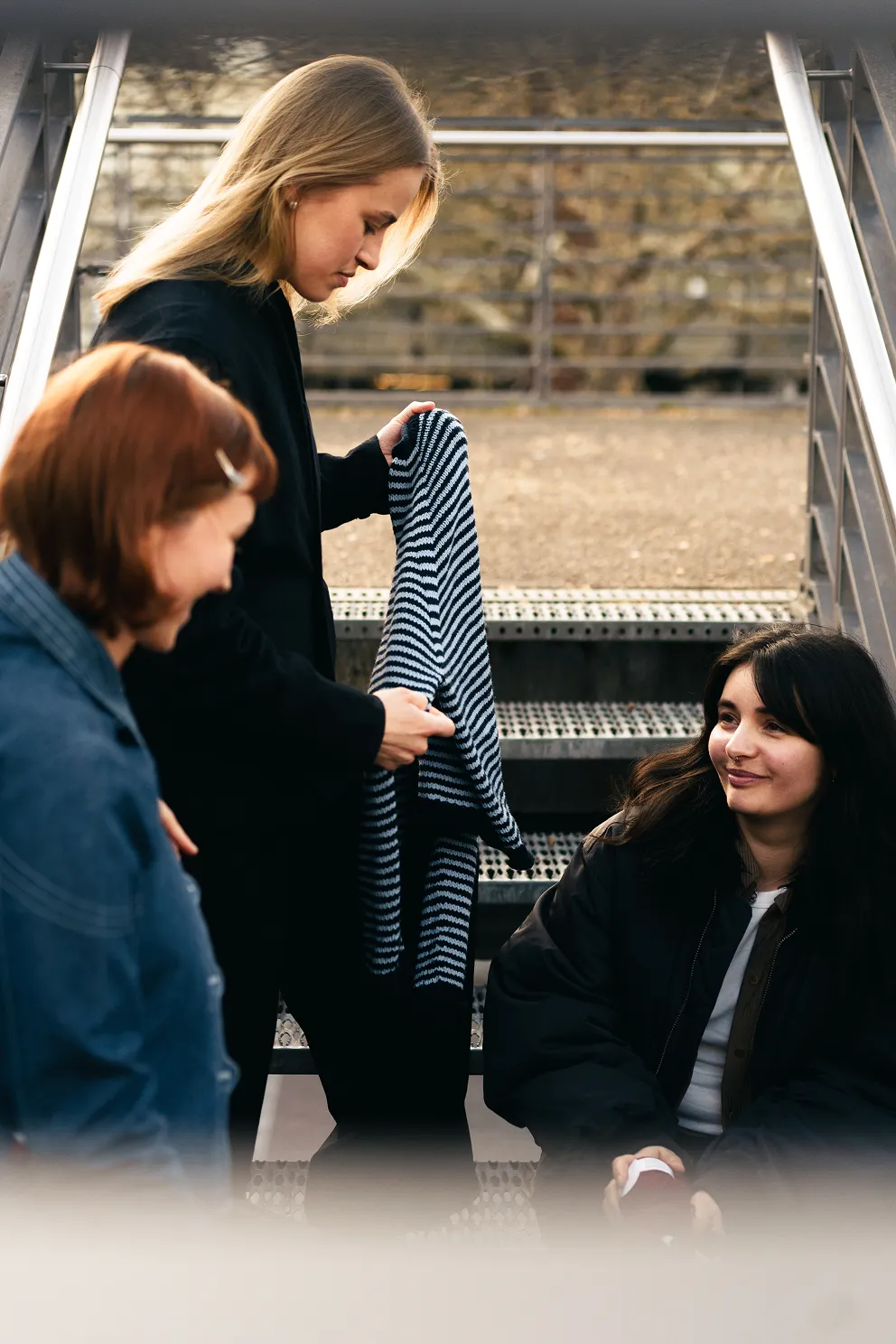
Superfine NATIVA™ Merino Wool
17.5 µm. Worsted-spun. Not superwash.
Why 17.5 microns matters
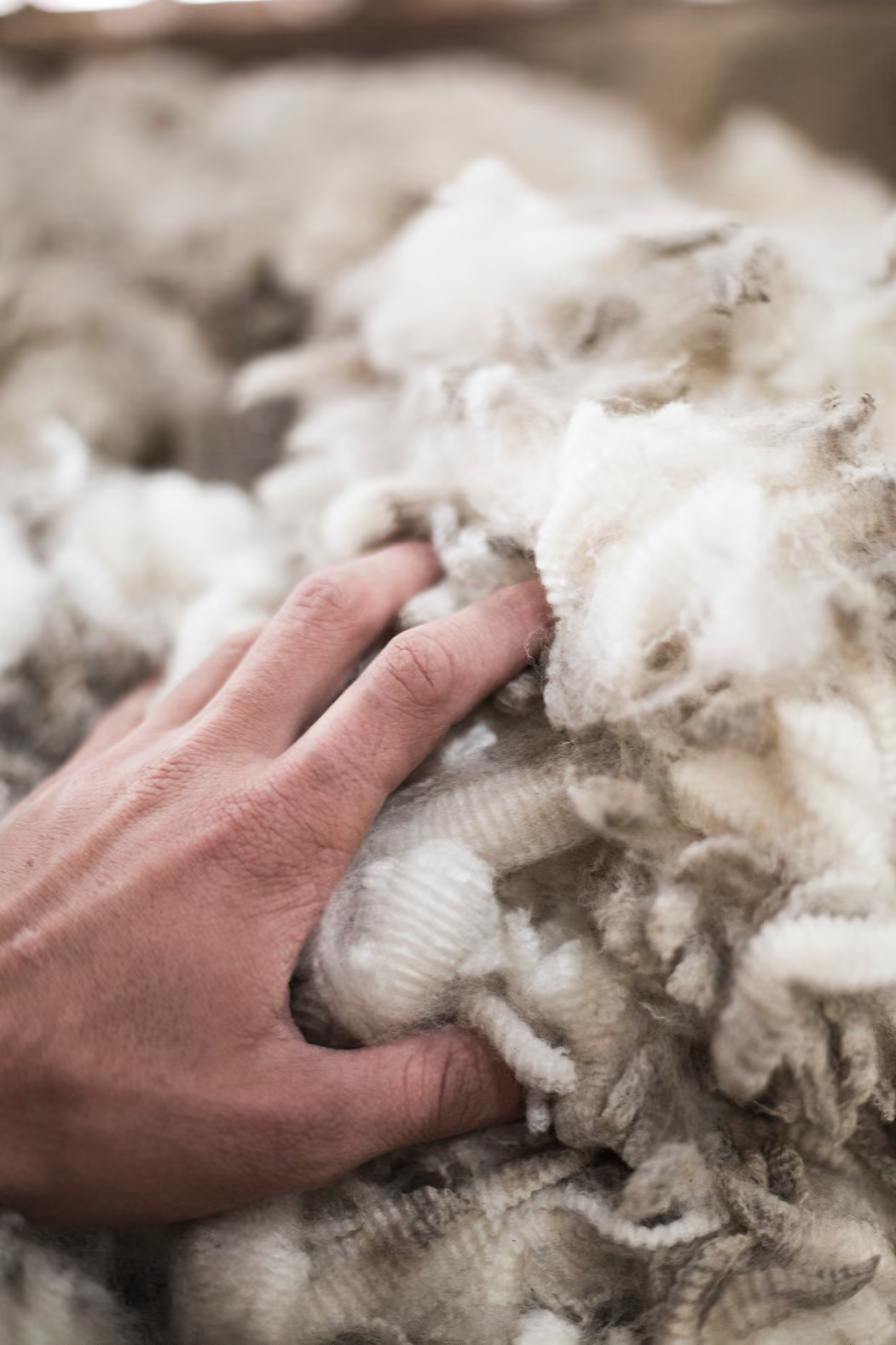
Our wool is superfine merino at 17.5 µm - the fine end of the superfine range. For comparison: regular wool is 25-40 µm, cashmere is 14-19 µm, and human hair is around 50 µm. At this fineness, the fiber is soft enough for sensitive skin and next-to-skin wear.
Not superwash
The wool used in material.1 is not superwash. We don’t coat the fiber in chemicals or strip its natural surface. That means it needs a gentle hand wash - but it also means the wool stays the way it was grown: soft, breathable, and free of synthetic coatings.
Worsted-spun
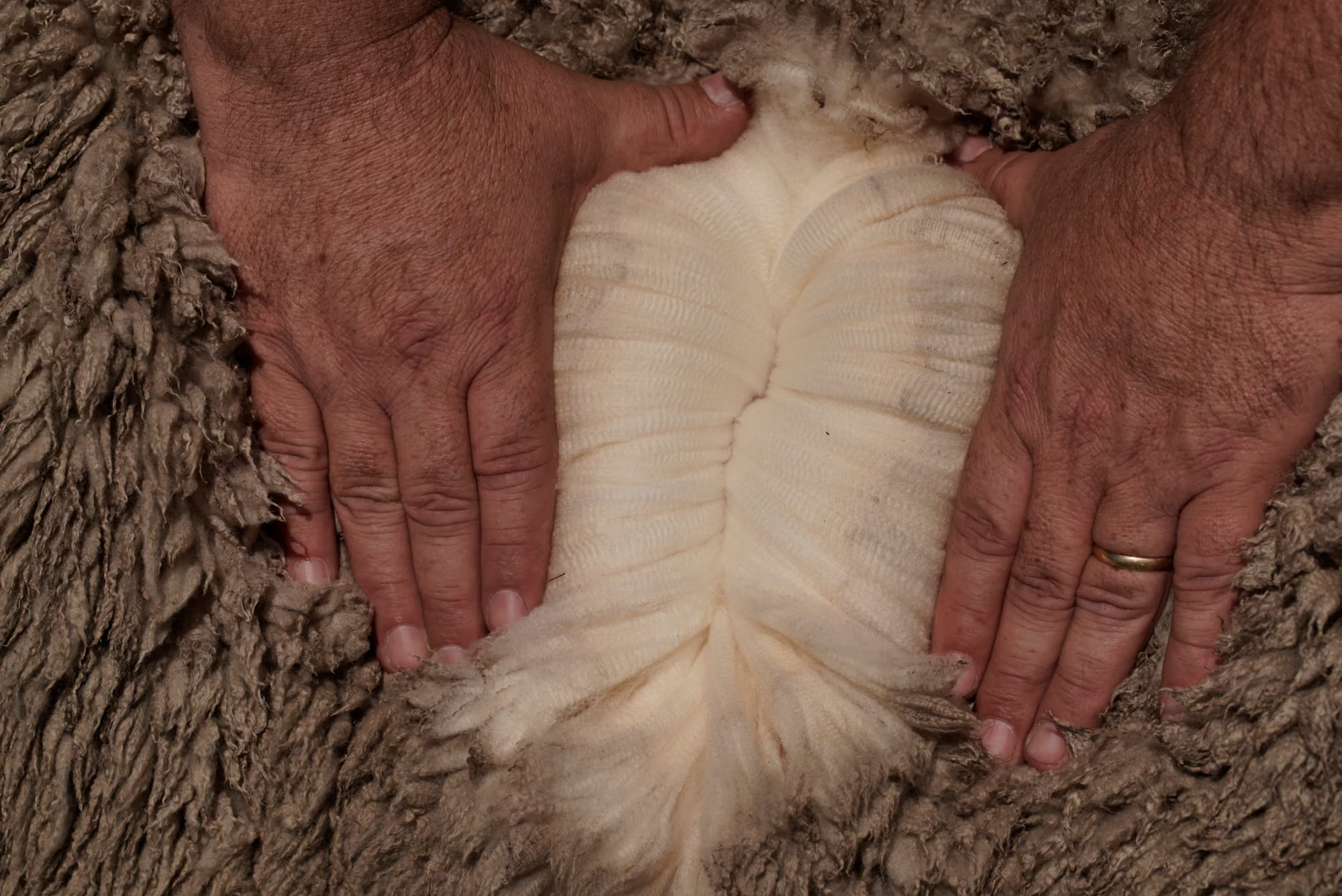
In our material.1 yarn we use worsted-spun wool. Every fiber is combed and aligned before spinning - no air pockets, no loose ends. The fiber is relaxed, making the tension of handknitted stitches even and smooth.
Where it comes from
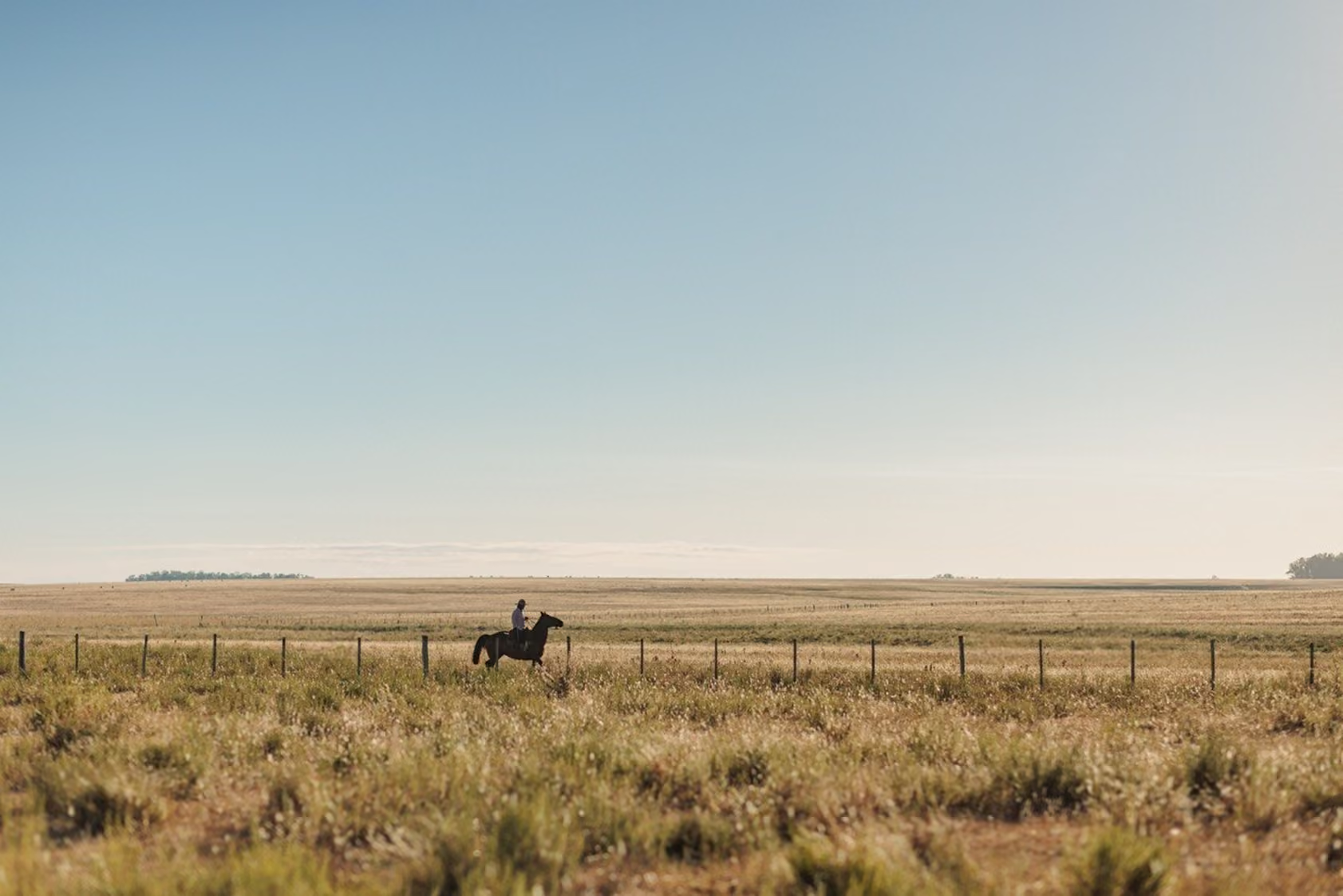
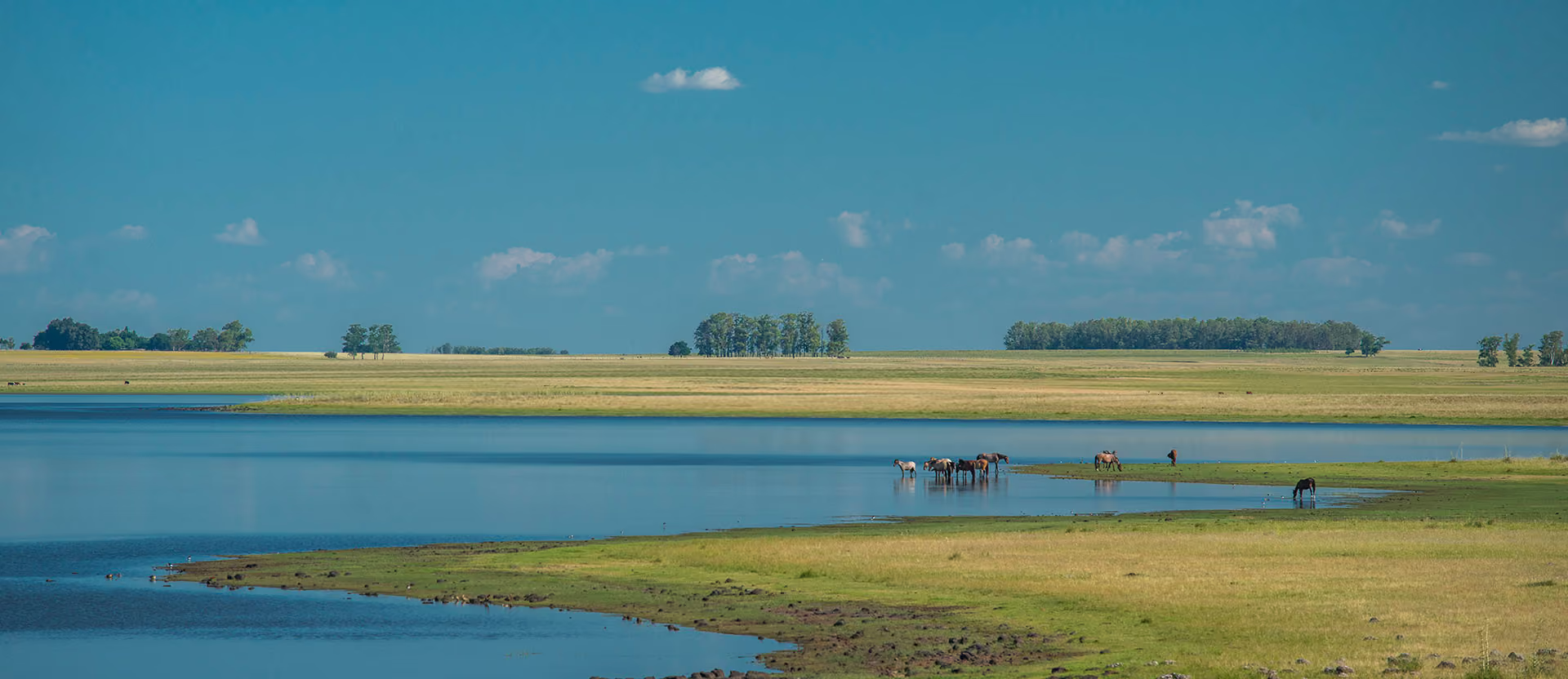
Our wool comes from NATIVARegen™ farms in Uruguay, where the soil is restored, animals live on open pastures, and every fiber can be traced back to the exact farm where it was grown.
NATIVA™ showed us that wool is more than just fiber - it’s the animals, the land, and generations of family heritage. Through NATIVA™, we stay connected to the people behind the wool: the farmers and their families, and the communities NATIVA™ supports through education, training, and cultural programs.
Crafted in Italy, following strict environmental and quality standards.
What knitters say
Knitters say
@ohwhata.knit
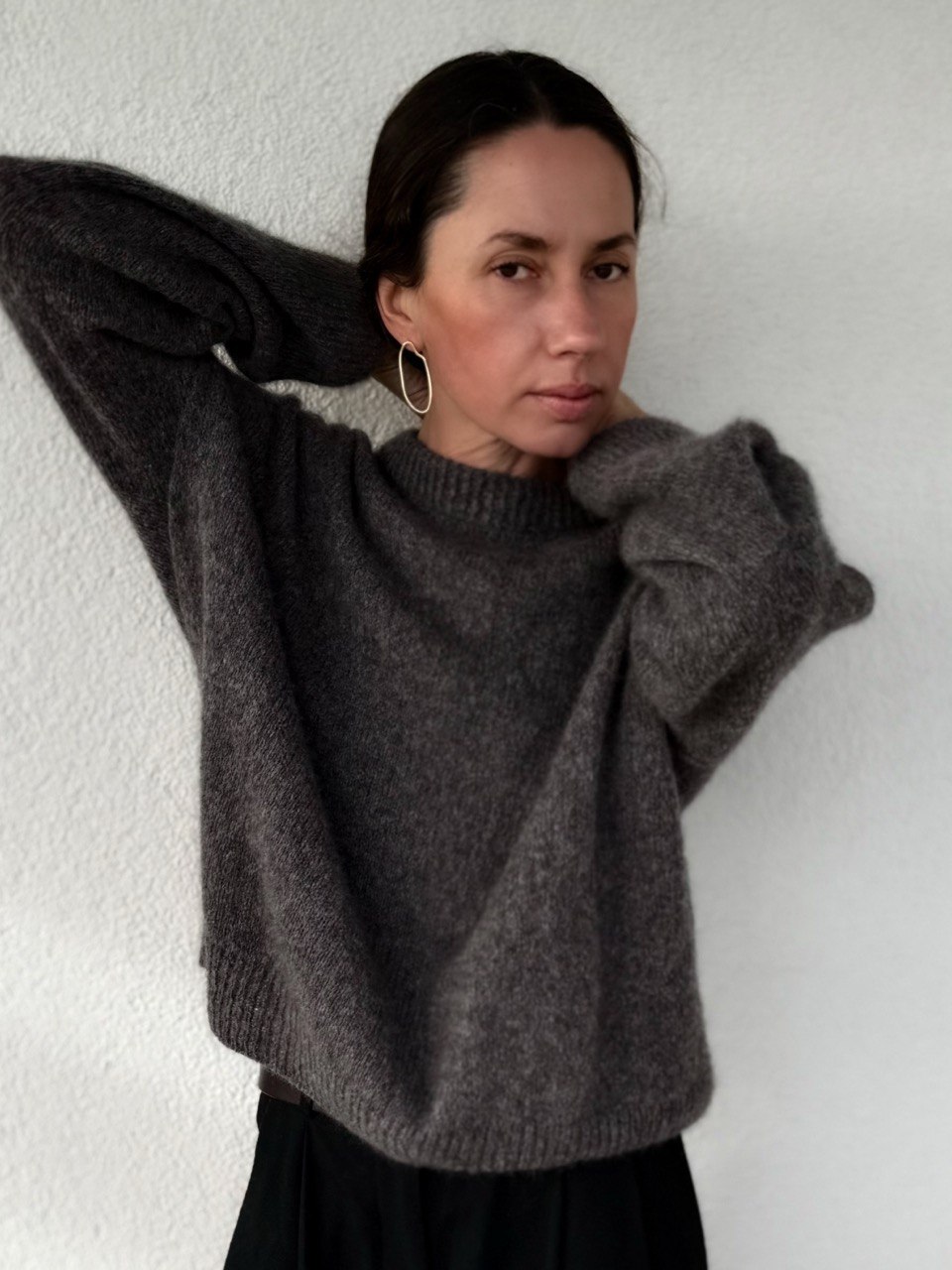
Tatjana Sieke
“The knitting experience was excellent. The yarn is exceptionally soft and glides smoothly over both the fingers and needles without any scratching, catching, or resistance. It has a subtle, fluffy halo…
In a 1x1 rib pattern, the yarn performs exactly as expected, creating an elastic rib while feeling noticeably finer and softer than conventional merino.”
Knitters say
@knithappns
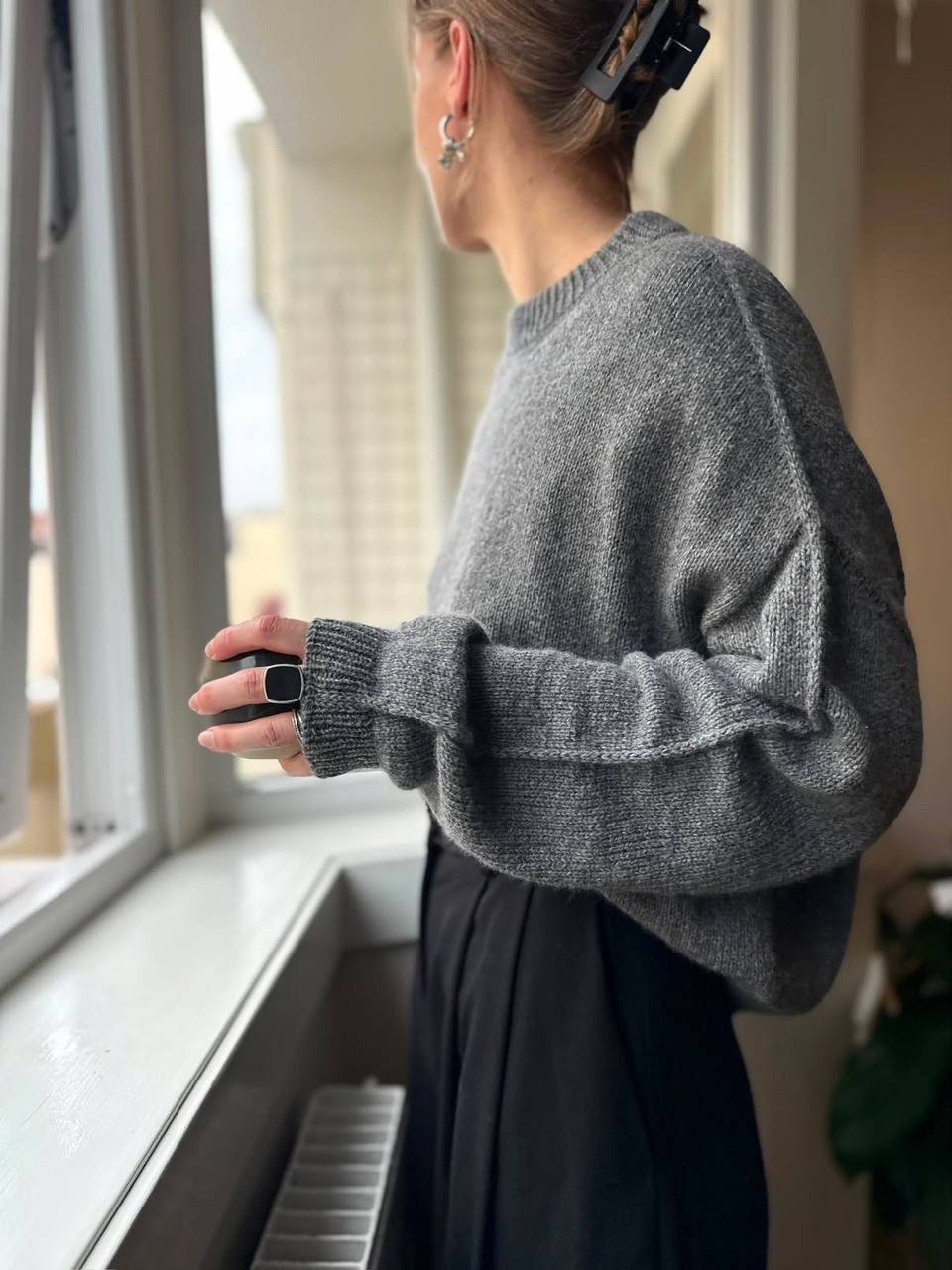
Stine Jøntvedt
“The yarn has a very soft, almost creamy texture. It feels delicate, voluminous, and elegant in the hand. Using my preferred needle size of 3.5mm, the stockinette fabric shows good stitch definition while retaining the yarn’s characteristic softness and loft after blocking.
The yarn’s greatest strengths are its exceptional softness, pleasant hand feel, and elegant appearance - delicate and light on the skin.”
Knitters say
@knitgineer
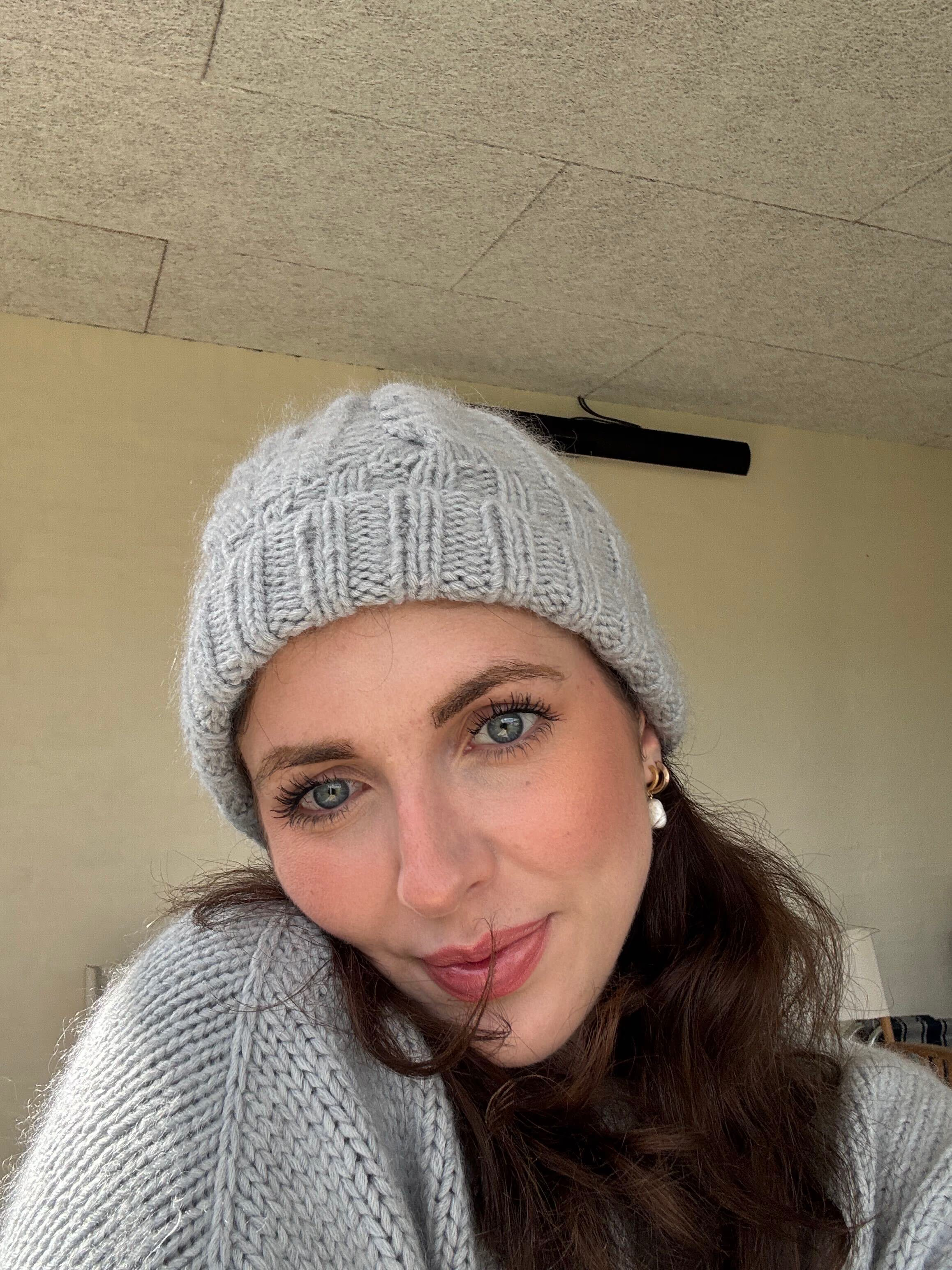
Laura Fjordside Bang
“As a chemical engineer specializing in fiber science, I’m always curious about innovative materials, and material 1 genuinely impressed me. It’s incredibly soft and scrumptious, glides beautifully across the needles, and is simply a joy to knit with.
A technically fascinating fiber that also delivers where it matters: in your hands and on your needles.”
Circularity
material.1 is designed with the vision of returning to where it came from.
Knit it — shape it into something of your own.
Wear it — a piece made with your own hands carries the process in it: the hours, the choices, the mistakes you fixed along the way. That is the opposite of fast fashion, where quantity matters more than what went into making it.
Care for it — gentle hand wash keeps it soft, breathable, and intact.
Feed it — our long-term vision is that worn-out biobased textiles could be converted into fermentation nutrients and used as raw materials for new biobased products.
Brewed Protein™ fiber is grown from plant sugars today; in the future, we envision it could be grown from biobased textiles — closing the loop instead of ending it.
BioCircular Materials Alliance
We’re part of a coalition working toward a circular materials economy.
The BioCircular Materials Alliance (BCMA) was founded to harness the transformative power of biology to accelerate the global transition toward a circular future, bringing together brands, manufacturers, and innovators to turn biobased waste - from textiles, agriculture, and forestry - into valuable materials again.
MIAVKA is a member of the BCMA. Through this alliance, we stay connected to shared research and standards for circular, bio-based materials - and contribute our own perspective as the first hand-knitting yarn brand working with Brewed Protein™ fiber.
→ biocircularmaterials.org
Impact on nature
Brewed Protein™ fiber shares the fine qualities of animal fibers, but it is grown through fermentation rather than farmed. That gives it a much lighter footprint than resource-intensive fibers like cashmere.
Brewed Protein™ fiber compared to cashmere
>75%↓
>75%↓
>90%↓
>90%↓
Over 75% lower greenhouse gas emissions
Over 75% lower eutrophication - meaning less excess nutrient runoff into rivers and lakes
Over 90% lower land use
Over 90% lower water use
>75%↓
Over 75% lower greenhouse gas emissions
>75%↓
Over 75% lower eutrophication - meaning less excess nutrient runoff into rivers and lakes
>90%↓
Over 90% lower land use
>90%↓
Up to 97% lower water use
These figures describe Brewed Protein™ fiber, not material.1.
material.1 is a blend of 70% Superfine NATIVA™ Merino wool and 30% Brewed Protein™ fiber, so its overall footprint is different. Figures for Brewed Protein™ fiber are based on Spiber's measured production data from 2024-2025, using renewable electricity.
Brewed Protein™ fiber (as used in material.1) has demonstrated 98% biodegradation in natural seawater within 6 months in undyed form, as reported by Spiber (tested per ISO 23977-1). Dyed material.1 has not yet been separately tested.
FAQ
The 70/30 blend lets each fiber bring its own character. Superfine NATIVA™ Merino gives warmth and structure. Brewed Protein™ fiber adds softness, lightness, a relaxed drape, and natural odor resistance.
Yes. At 17.5 µm, the wool is below the prickle threshold. Brewed Protein™ fibers have a smooth, scaleless surface.
The microbes used in the production of Brewed Protein™ are genetically engineered to produce the desired protein polymers. These microbes are fully removed after fermentation, and the final Brewed Protein™ fibers contain no genetically modified organisms (GMOs). Spiber strictly follows the Cartagena Protocol on Biosafety throughout its research and production processes to ensure responsible management of biological safety.
Yes. The microbes are classified Biosafety Level 1 (lowest risk). They are designed to survive only inside a closed fermentation system.
Brewed Protein™ is expected to use less than 0.001% of global cereal crop production at planned near-term production levels. Over time, Spiber aims to transition to agricultural byproducts and waste streams, such as bagasse.
Spiber's testing showed that an undyed yarn made from Brewed Protein™ fiber achieved 98% biodegradation in natural seawater within six months under ISO 23977-1 test conditions. The finished, dyed material.1 yarn has not yet been separately tested. Our long-term vision is to keep materials in use for as long as possible and ultimately enable them to become the starting point for new materials. We will share further test results for the finished material.1 yarn as they become available.
No. It sheds microfibers like any textile, but they are protein and wool, not plastic.
material.1 is dyed in Italy, in the same region where it is spun. We work with a dye house that is certified for its chemistry and its water, and we chose it for that reason.
Superfine NATIVA™ Merino wool and Brewed Protein™ fiber absorb dye differently, so subtle variations in shade may occur within a skein and between skeins, even within the same dye lot. For the most consistent result, use skeins from the same dye lot throughout your project.
No. We use conventional dyes, because they are what works on protein fibers and what gives colours that stay. What we can tell you is how the dyeing is controlled. The dye house holds OEKO-TEX Standard 100 in Product Class I, the strictest class, the one used for baby articles. Its wastewater is reported at 100% compliance with the ZDHC MRSL, with heavy metals not detected. It also holds ZDHC Supplier to Zero Level 2 and a ZDHC Performance InCheck at MRSL Level 3. The dyeing is REACH compliant and PFAS-free.
Garments that fall naturally, such as oversized pullovers, drop shoulder sweaters, cardigans, scarves, handkerchiefs, and blankets.
material.1 is a relaxed yarn, so it is not the right choice for pieces that depend upon holding their shape or a stitch pattern: fitted garments, socks, gloves and mittens, bags, lace, and cables.
Avoid garments that depend on holding their shape: fitted garments, socks, gloves and mittens, bags and totes. Also avoid pieces that depend on stitch definition, such as lace and cable sweaters. The yarn is spun in a relaxed way, so make sure the threads do not split while knitting.
Always wash and block a swatch before starting your project, as wet blocking may change the finished dimensions. Handle the wet fabric gently, support its full weight, and dry flat. See our care guide for detailed instructions.
Hand-wash it as usual, then put it in a garment bag and run a spin cycle at 400-600 rpm in your washing machine. See the material.1 care guide.